
Metabolic
We teach the body to work with oxygen more efficiently — and show it in numbers
- Session length
- 75–95 minutes
- Sessions in a course
- A course of 5–10 sessions with control measurements
Illustration
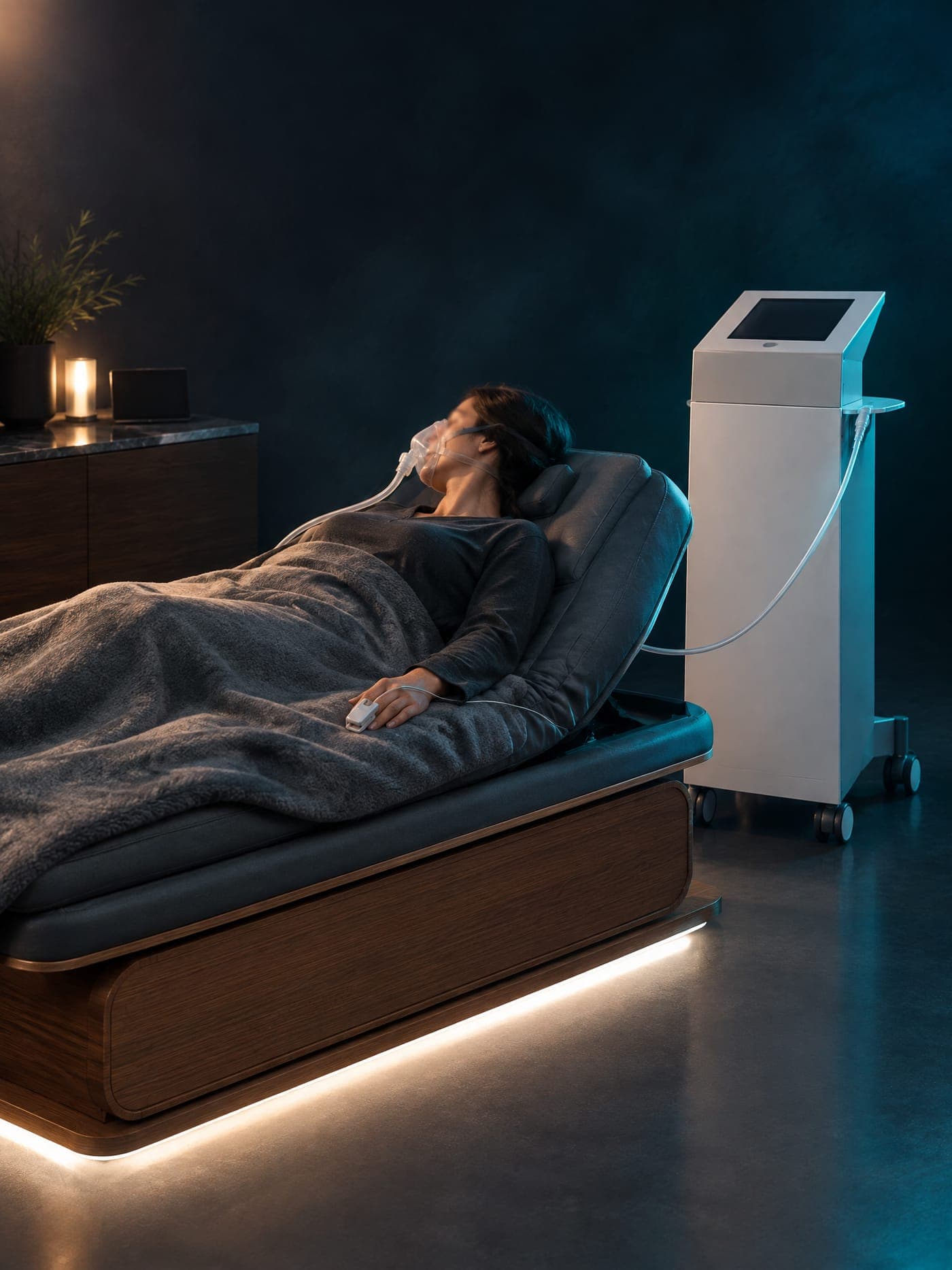
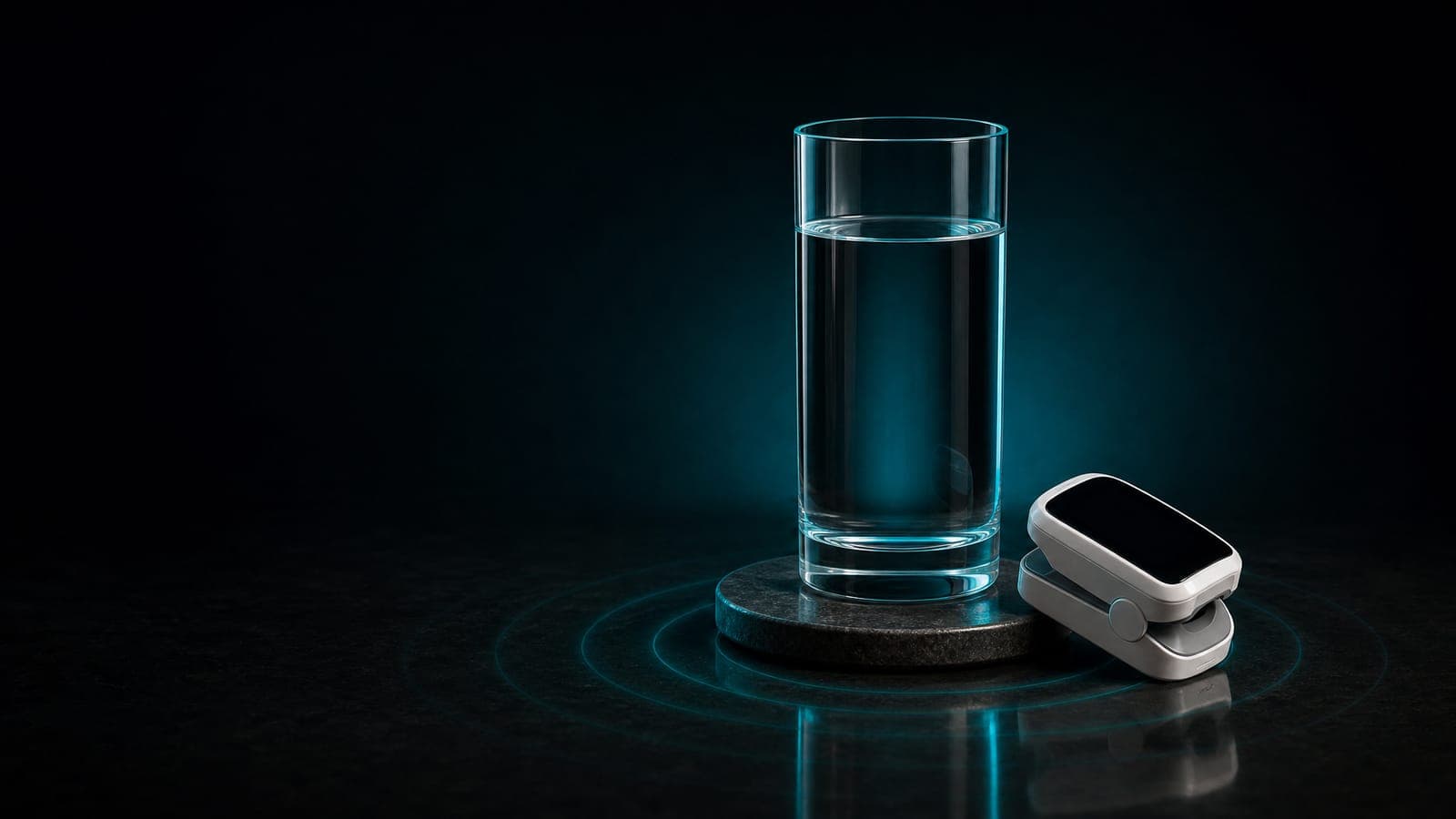
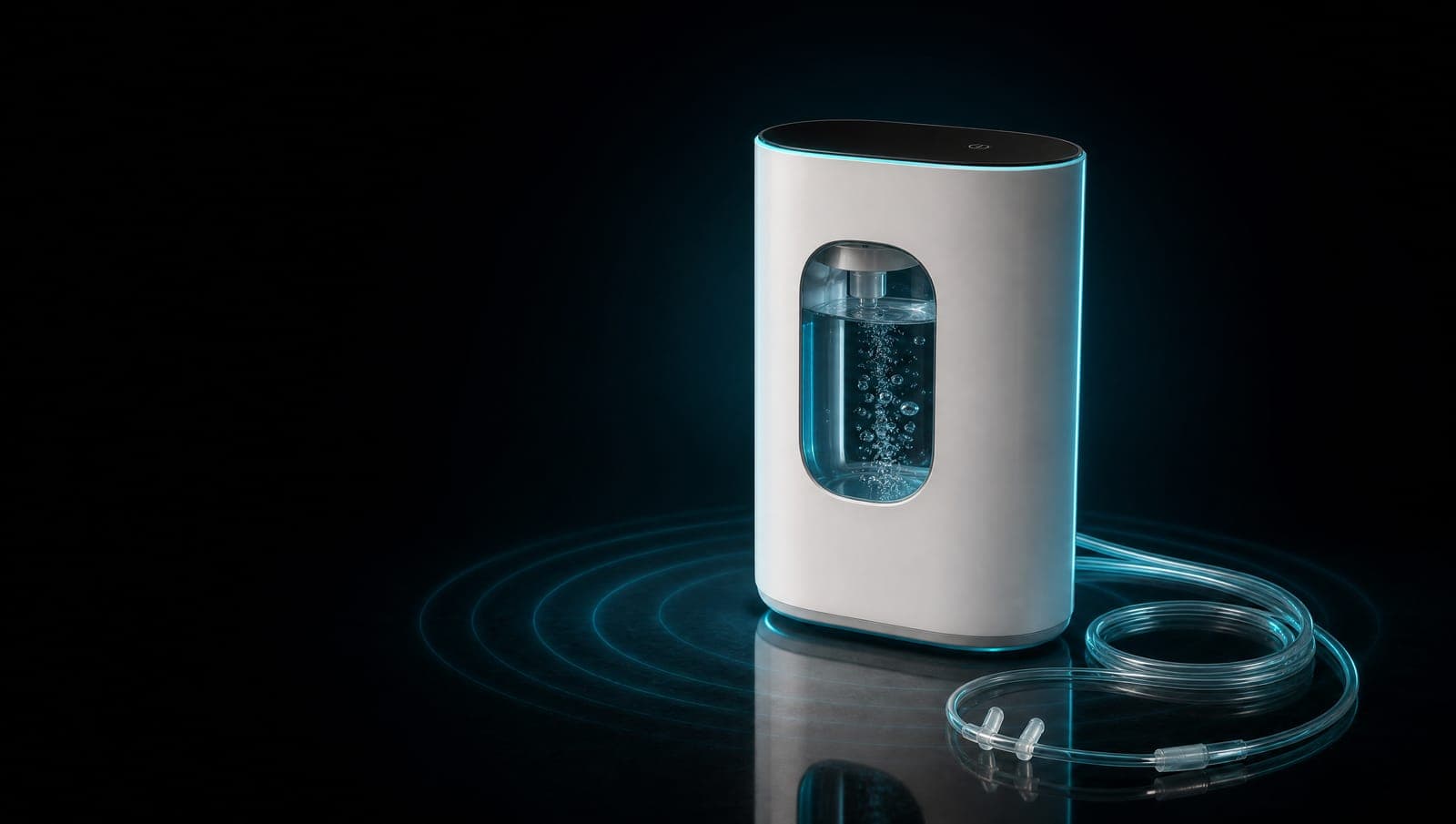
We do not give the body more oxygen. We teach it to work more efficiently with the oxygen it already has. The protocol is built on the “stimulus → recovery” scheme. The stimulus is CellAir One (Cellgym, Germany, a certified medical device): lying in a mask, you go through several cycles of hypoxia and hyperoxia — “climbing the mountain and coming down in fast mode”. SpO₂ is monitored throughout the session; minimal oxygen is not the goal, what matters is the dose and the response.
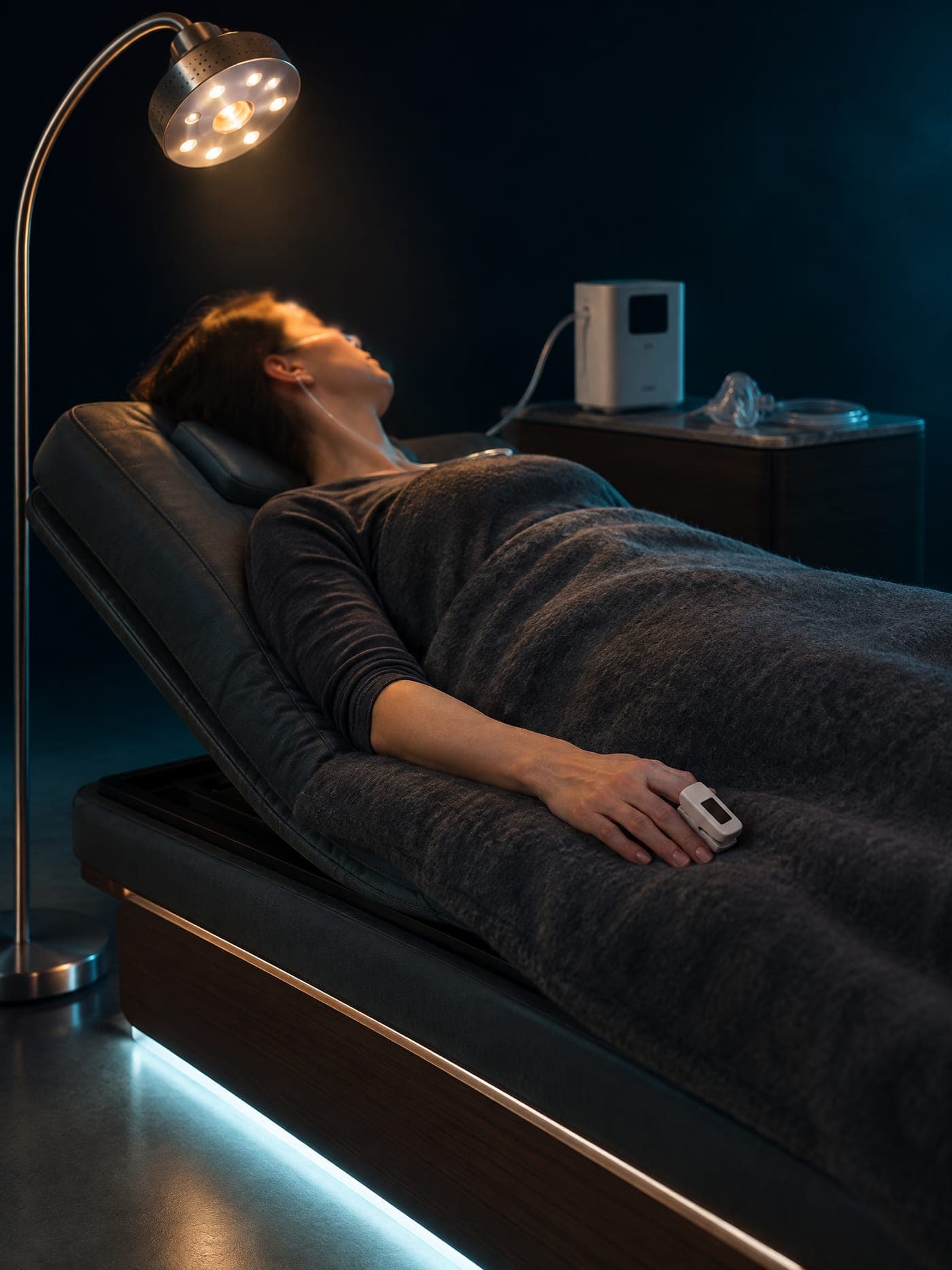
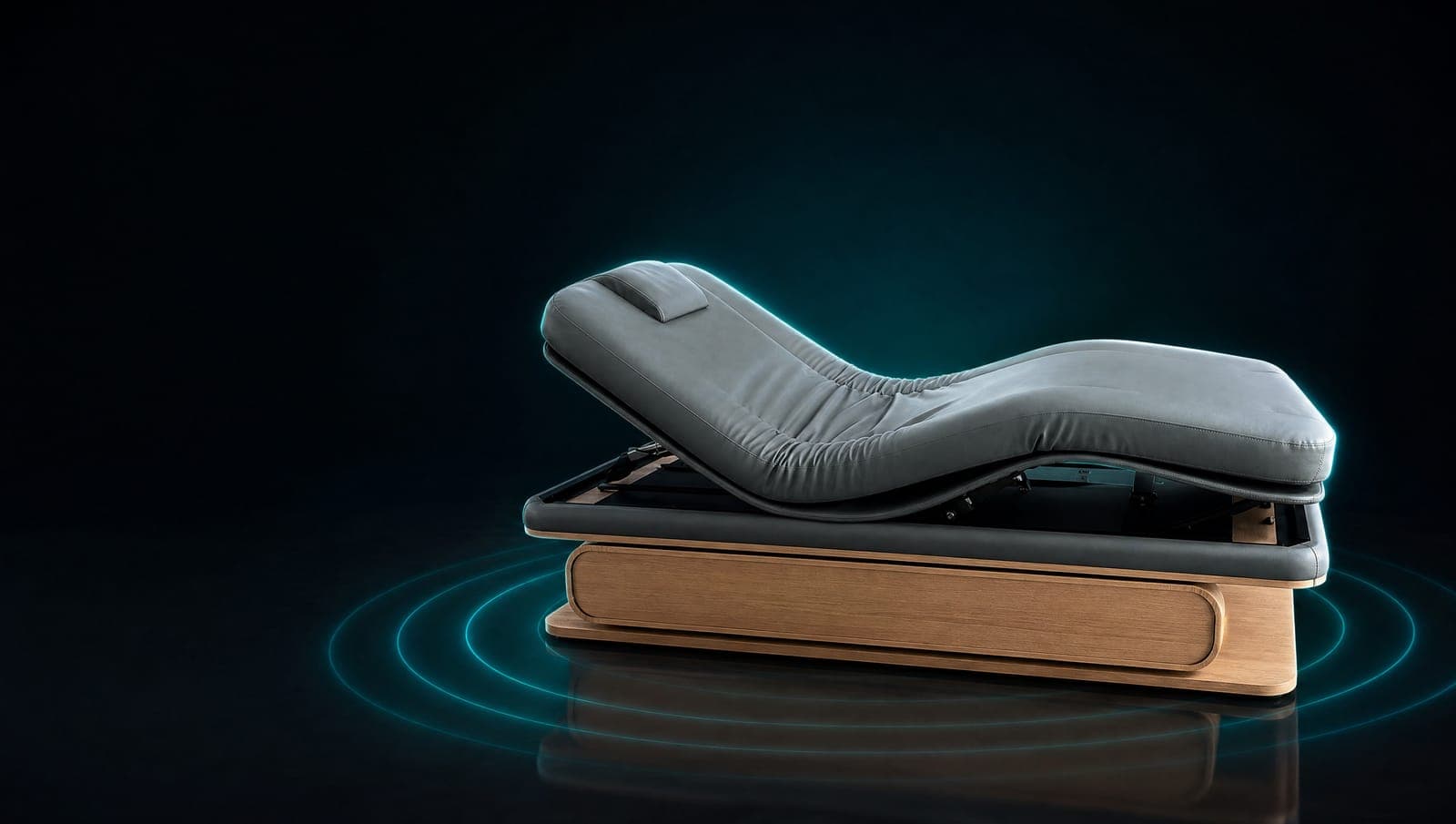
Then — recovery: the pulsed magnetic field of the Sedona Longevity Lounger, the hypnagogic light of Lucia N°03 with the eyes closed and molecular hydrogen breathing. This half moves the nervous system from stimulus mode into recovery mode.
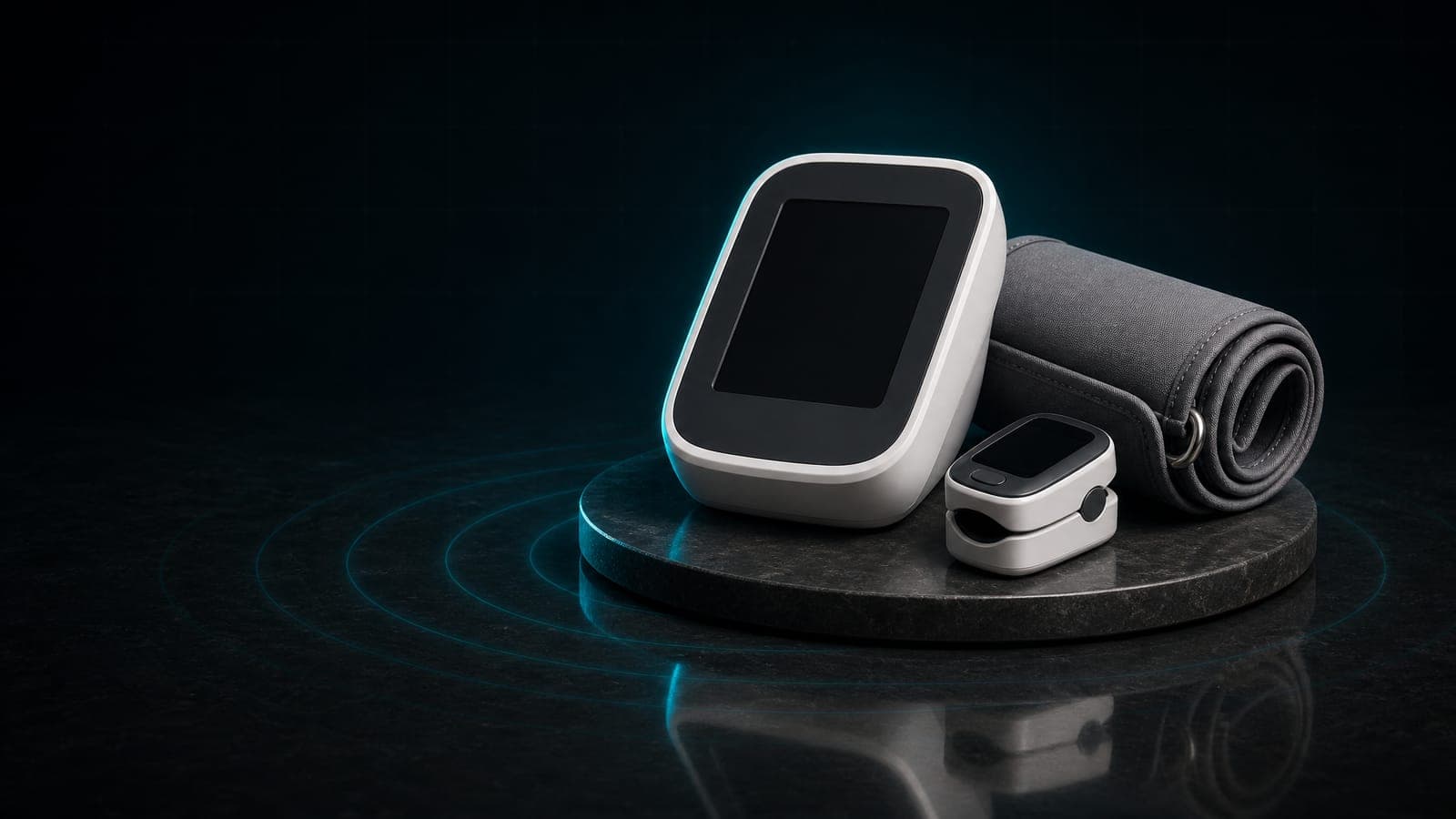
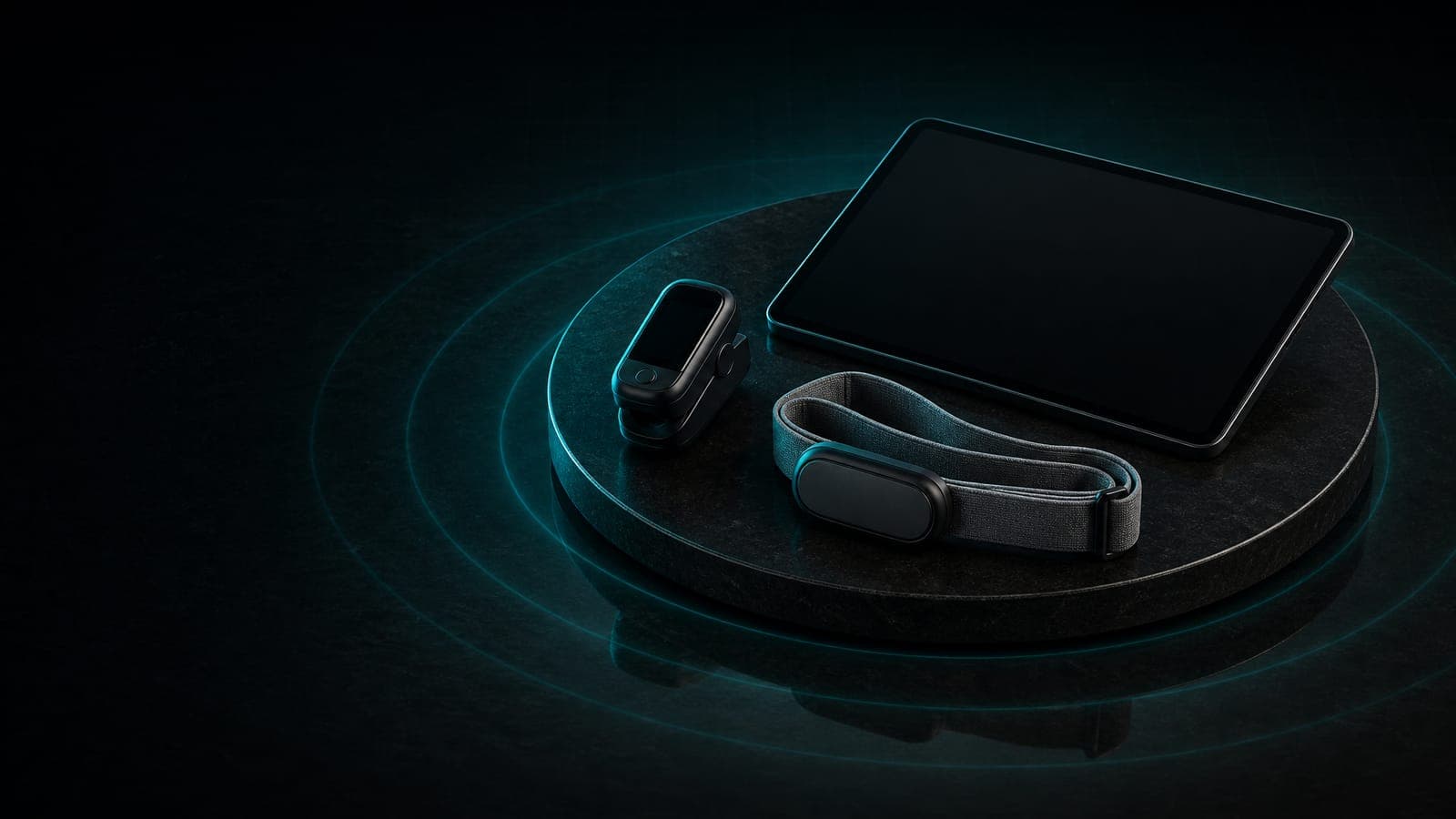
Before and after every session, pulse, SpO₂, blood pressure and heart rate variability are recorded; during the training — the response to each interval and the speed of recovery. After 5–10 sessions it is visible how much more easily the same stimulus is tolerated. This is a course with a journal, not a ritual.
Illustration
Sequence
How a session goes
- Step 15 min
Measurements “before”
Pulse, SpO₂, blood pressure, heart rate variability, an energy and stress scale.
What you feel: A minute of quiet before the start.
- Step 230–40 min
CellAir One
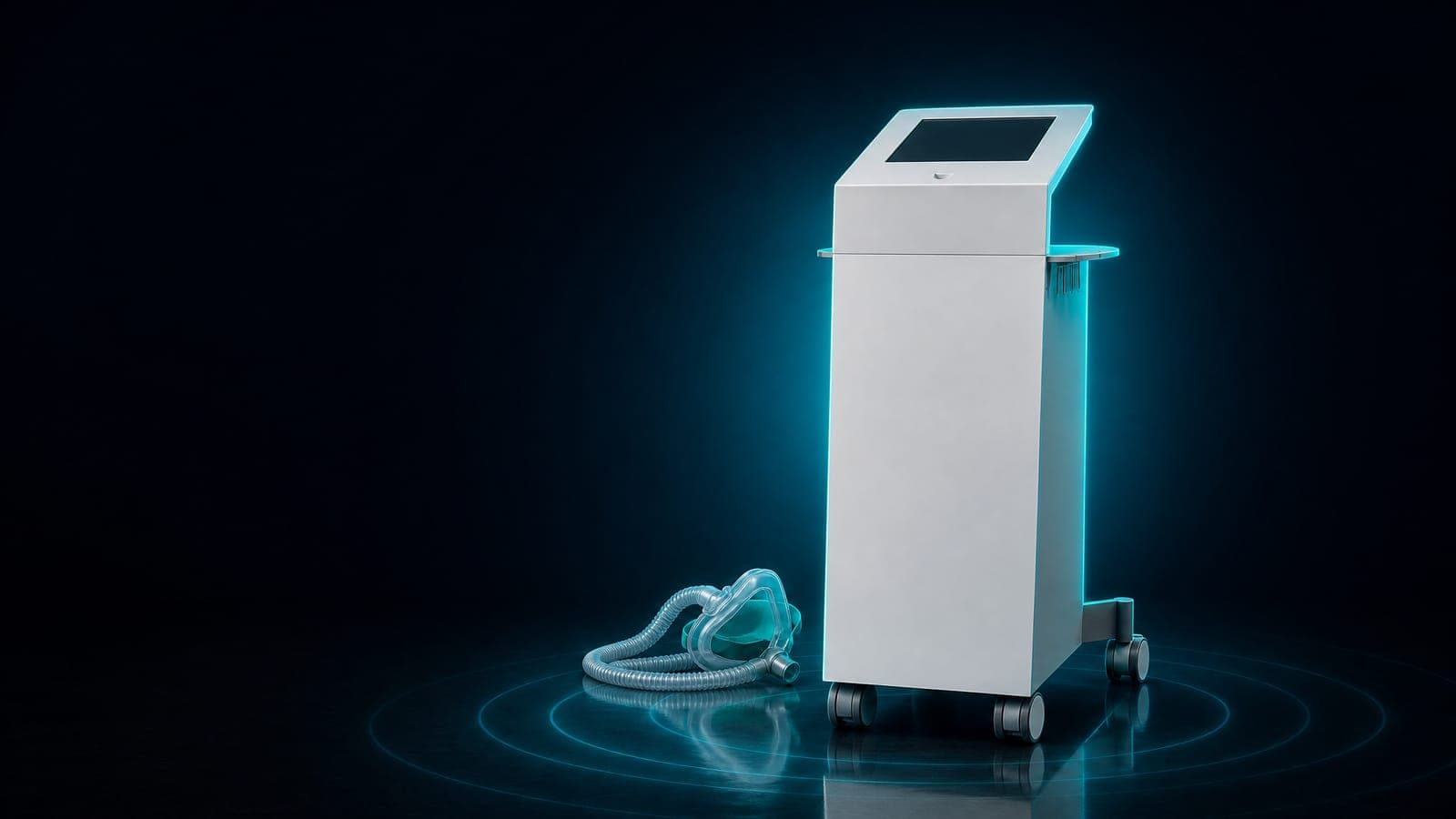
Cycles of hypoxia and hyperoxia; we record the SpO₂ response and the recovery time after each interval; stop thresholds are set in advance.
What you feel: “Climb”: deeper breathing, a slight effort; “descent”: warmth and release.
- Step 35–10 min
Calm recovery
Pulse, SpO₂; water.
What you feel: A return to even breathing.
- Step 415–20 min
Sedona Longevity Lounger
A whole-body pulsed magnetic field in relaxation or harmonisation mode.
What you feel: Heaviness and warmth in the body, calm.
- Step 515–20 min
Lucia N°03 and hydrogen
Hypnagogic light with the eyes closed; alongside — molecular hydrogen breathing.
What you feel: Colour and patterns behind closed eyelids, thoughts slow down.

- Step 65 min
Measurements “after”
Pulse, SpO₂, blood pressure, heart rate variability, a subjective scale; the delta goes into the journal.
What you feel: A comparison with “before” right there, on the spot.
Every protocol starts with a KME check and heliox breathing
Course
- 5–10 sessions with metrics recorded; the assessment is how much more easily the same stimulus is tolerated.
- The course is framed by a check-up before the start and a control one after: vascular age, VO2max.
What the protocol is made of
Every protocol starts with a KME check and heliox breathing
Why it works
CellAir One (IHHT)
Dosed intervals of hypoxia and hyperoxia are an adaptive stimulus: it may stimulate adaptation of the mitochondrial system and support adaptive regulation of the immune and inflammatory response. Pronounced and chronic hypoxia is harmful, which is why dosing and monitoring are essential.
Sedona Longevity Lounger
A gentle whole-body pulsed magnetic field; a session by the manufacturer is 30 minutes.
Lucia N°03
Photic driving: partial synchronisation of brain activity with the rhythm of the light, a shift from the beta to the theta range.
Hydrogen inhalation
A recovery component; clinical studies, experimental status.
Measurements
HRV, SpO₂ and blood pressure are markers of the current state; pulse wave velocity is a recognised marker of vascular risk; VO2max is the gold standard for assessing endurance.
Philosophy of the method
In the founder's concept a person is a system: the physical body and the field structure — all the subtle bodies, the psyche and consciousness — and both levels need attention. He describes interval hypoxia as “climbing the mountain and coming down in fast mode” — a training after which the body needs to return to rest. We start from the view that a stimulus without recovery is just stress, and recovery without a stimulus is just rest. The protocol brings both halves into one visit and measures the result.
From our observations
What you get
- Both halves — stimulus and recovery — in one visit
- Numbers before and after every session, not only sensations
- Over the course it is visible how much more easily the same stimulus is tolerated
- Even breathing and calm after the training
Questions and answers
Is it safe with heart problems?
With a cardiac history — only under medical supervision with stop thresholds for SpO₂, pulse and rhythm set in advance. Before the first visit — a contraindication questionnaire.
How is this different from a single IHHT session?
By the recovery half and the journal: measurements before and after every session and the dynamics over the course.
There are contraindications. Consult a specialist.